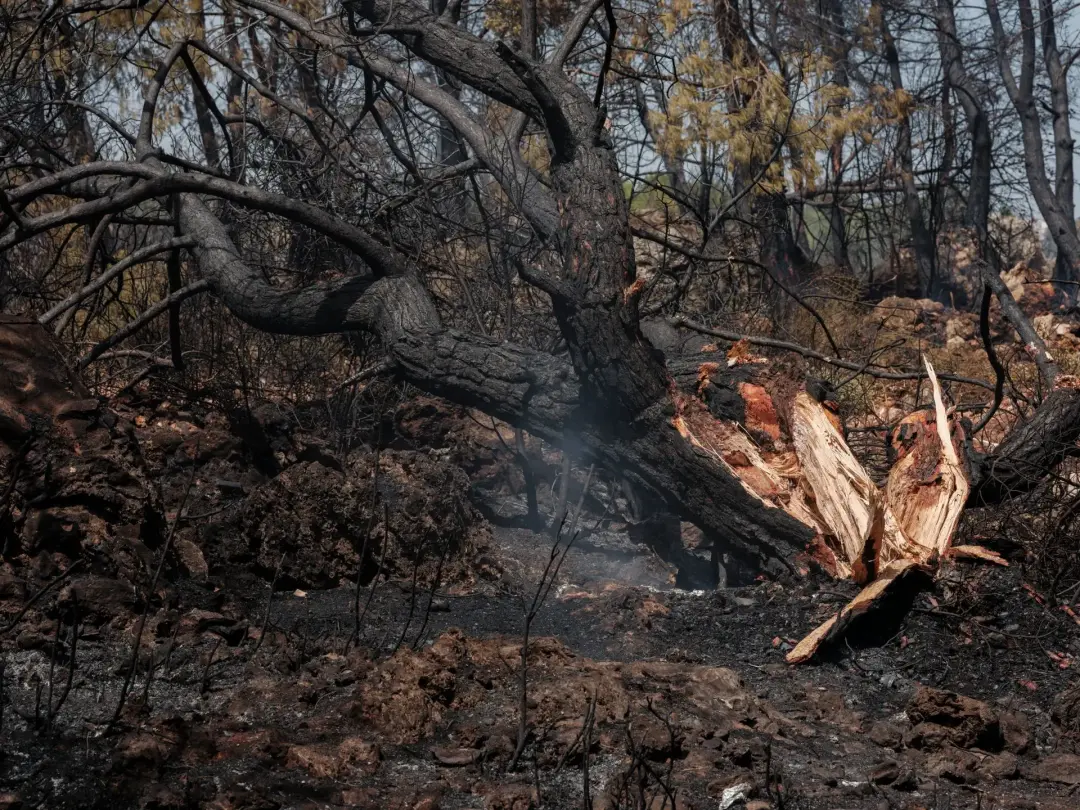
How to Assess a Storm-Damaged Tree
Assessing a storm-damaged tree begins by looking for obvious structural changes from a safe distance. Check whether the tree has developed a new lean, lost major branches or suffered visible cracks in the trunk. The ground around the base can also provide useful information. Lifted soil, exposed roots and fresh cracks may indicate movement within the root system.
Look at the crown for broken or hanging limbs. Branches can remain trapped within neighbouring growth and fall later without warning. The amount of healthy canopy remaining is another important consideration. A tree that has lost only smaller branches may recover more successfully than one that has lost most of its main crown.
Professional assessment is recommended where damage is substantial. A tree surgeon can evaluate the roots, trunk, branch unions and remaining crown together. Avoid standing underneath damaged branches or climbing the tree yourself during the initial assessment.
Signs a Storm-Damaged Tree May Be Saved
A storm-damaged tree may be suitable for retention when the main trunk remains structurally sound, the roots have not moved significantly and enough healthy crown remains to support future growth. Smaller broken branches can often be removed through careful pruning without affecting the long-term stability of the tree. Even some larger branch losses can be managed if the remaining structure is well balanced. A tree that has not developed a new lean after the storm is generally more encouraging than one showing obvious root plate movement. Firm soil around the base and an absence of lifted roots can indicate that anchorage remains intact.
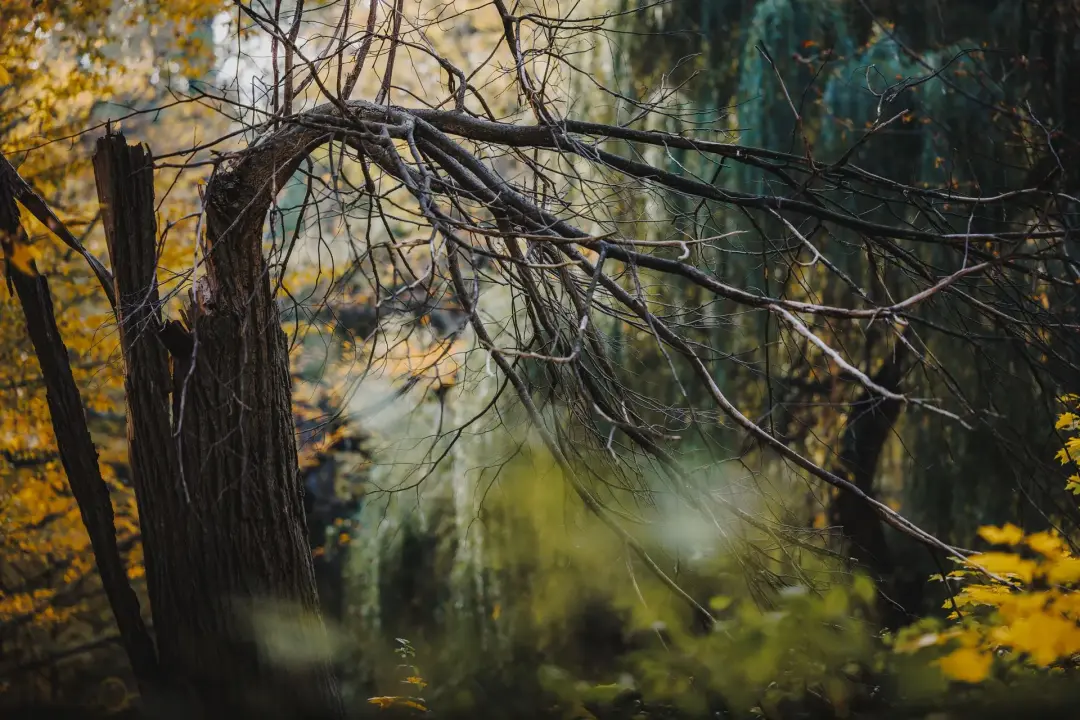
Cracks should also be considered. Minor branch damage is very different from a deep split through the main trunk or an important fork.
Healthy buds, leaves and undamaged branches elsewhere in the crown can suggest that the tree still has enough living tissue to recover. The location of the damage matters as well.
A broken outer limb may be manageable, while similar damage at the base of a major stem could have more serious consequences.
A professional arborist can determine whether pruning, monitoring or another treatment could allow the tree to remain safely in place.
Signs a Tree May Need Emergency Removal
Emergency removal may be necessary when storm damage has significantly affected the tree’s structural stability. Serious warning signs include a sudden lean, lifted roots, deep trunk splits and major hanging branches. Movement around the base is particularly concerning because it can indicate that the root plate has begun to fail. A tree may also need urgent removal when large structural limbs have broken and the remaining crown is unstable.
Extensive decay exposed by the storm can make damaged sections more likely to fail. Location increases the urgency. A compromised tree beside a house, road, pavement or busy commercial area can present a greater risk than one in an isolated location.
People should remain outside the likely fall area until the tree has been professionally assessed. A tree surgeon can determine whether individual dangerous sections can be removed or whether controlled dismantling of the entire tree provides the safest solution.
Has the Tree Started Leaning?
A new lean after a storm can be one of the clearest signs that a tree’s root system has moved. Some trees naturally grow at an angle and remain stable for decades, so the important question is whether the position has recently changed. Look at the base from a safe distance. Freshly lifted soil, cracks in the ground or exposed roots can indicate that the root plate has started pulling from the surrounding soil. The direction of the lean also matters. A tree leaning towards a house, road, driveway or neighbouring property has the potential to cause significant damage if movement continues.
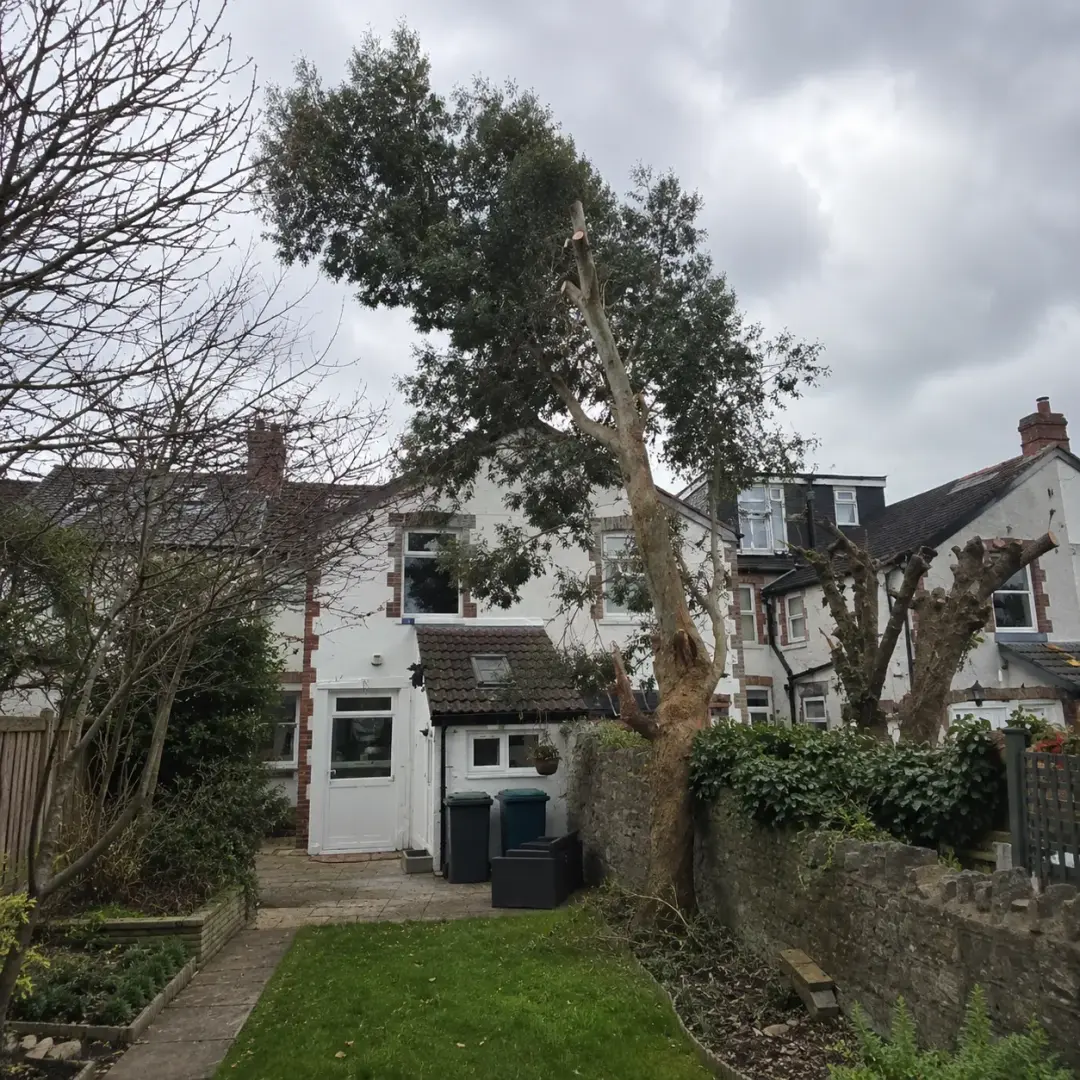
Saturated ground can make the problem worse. Heavy rain reduces the support provided by some soils, especially when combined with strong wind acting on a large crown.
Do not attempt to straighten the tree using ropes, vehicles or makeshift supports. Applying additional force can cause further movement. A professional should assess whether the roots remain sufficiently anchored.
Minor changes do not automatically mean removal is required, but substantial root plate movement can be difficult to reverse. Where the tree continues leaning or major structural roots have lifted, controlled dismantling may be the safest option.
Checking for Cracks and Splits in the Trunk
Cracks and splits in the trunk should be inspected carefully after severe weather because they can indicate that important structural wood has been damaged. Fresh cracks often expose lighter-coloured timber beneath the bark. They may run vertically along the trunk or develop between two major stems. A split within a fork can be particularly serious because each side may carry a large part of the crown.
Do not approach closely if the crack appears deep or is visibly opening as the tree moves. Older cracks and cavities may also become larger during a storm. The tree can sometimes remain stable if sufficient sound wood is present, but professional assessment is needed.
A tree surgeon will consider the depth and location of the damage, the amount of healthy wood remaining and the weight above the damaged area. Severe trunk splits may make emergency dismantling necessary, while smaller defects may be suitable for monitoring or management.
How Much of the Tree Canopy Has Been Lost?
The amount of canopy lost during a storm can influence whether the tree is likely to recover. A tree that has lost a few outer branches may retain enough healthy growth to continue developing normally after suitable pruning. Loss of several major limbs is more serious. Large branches contribute to the tree’s overall structure, and their removal can leave the remaining crown unbalanced. The position of the lost branches also matters. Damage spread evenly through the crown may have a different effect from losing most branches from one side.
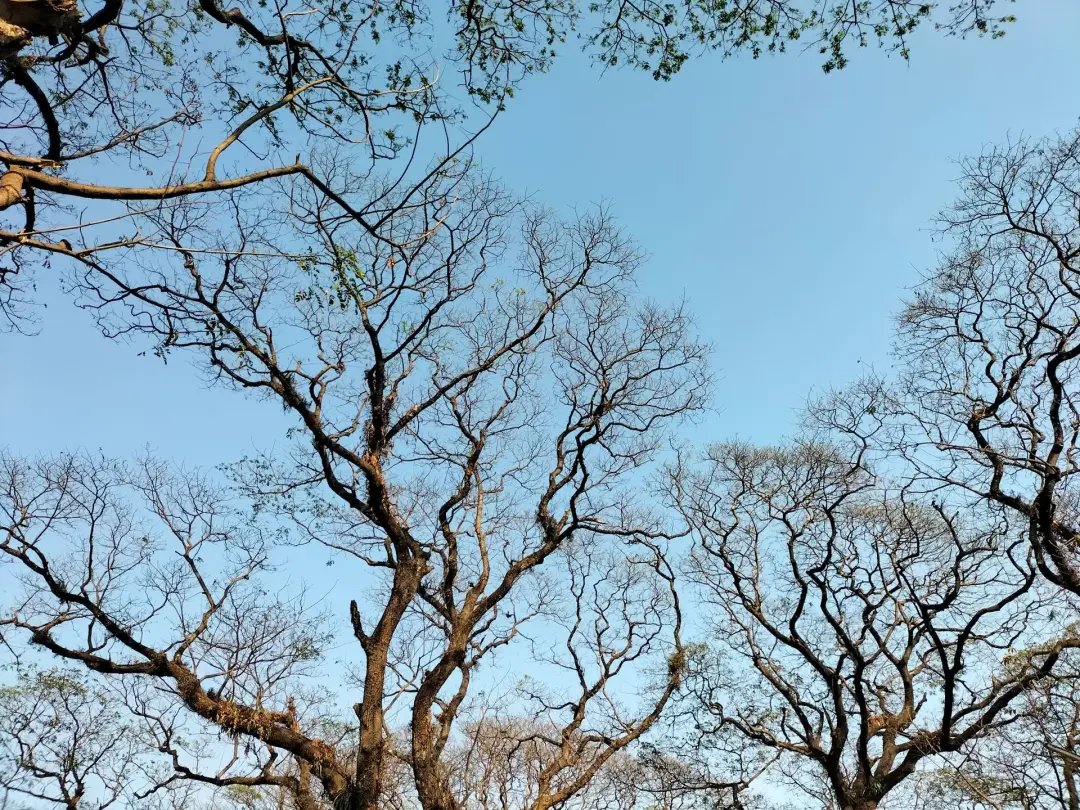
Very severe crown loss can reduce the tree’s ability to produce energy through its leaves. Large pruning wounds may also increase exposure to decay and further structural problems.
It is important not to remove additional healthy branches unnecessarily simply to make the tree look symmetrical. Excessive pruning immediately after storm damage can place further stress on the tree.
A professional arborist can assess whether the remaining canopy provides enough healthy growth and structural balance. Where suitable, damaged branches can be pruned back to appropriate points and the tree monitored during future seasons. When most of the main crown has been destroyed, however, long-term retention may no longer be practical or safe.
Assessing Broken and Hanging Branches
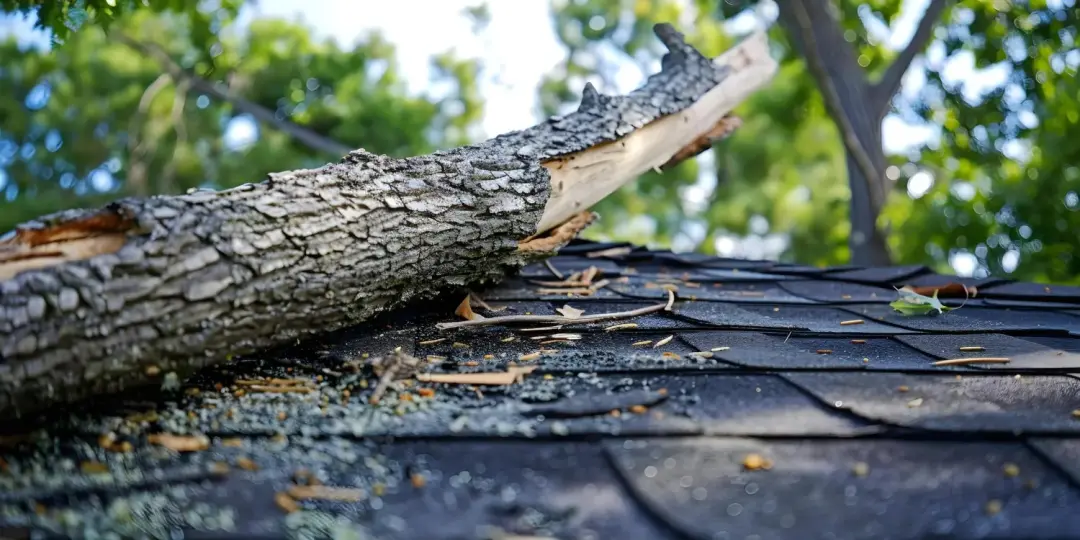
Broken and hanging branches should be treated cautiously because they can fall without warning. A branch may remain attached by only a small amount of wood or become trapped within neighbouring limbs. Look for torn bark, fresh exposed timber and branches sitting at unusual angles. Do not walk underneath the crown to inspect damage more closely.
Wind or movement elsewhere in the tree can release a suspended limb. Smaller damaged branches may be removed through straightforward pruning, while larger sections can require climbing, rigging or a mobile elevated work platform. The point where the branch broke should also be inspected.
A clean break on an outer limb may be manageable, while a split extending into the trunk can create a more serious problem. Professional removal of hanging branches can sometimes make the remaining tree safe without requiring complete removal. The overall crown should still be assessed for additional hidden damage.
Checking for Damage to the Root System
The root system is one of the most important areas to inspect after a severe storm because it provides the support that keeps the tree standing. Root damage may occur even when the trunk and crown appear relatively intact. Look from a safe distance for lifted soil, freshly exposed roots and cracks around the base. A section of ground rising on one side of the trunk can indicate that the root plate has started moving. Heavy rain can soften the soil and reduce its ability to hold roots securely. Strong winds can then pull structural roots upwards or tear them beneath the ground.
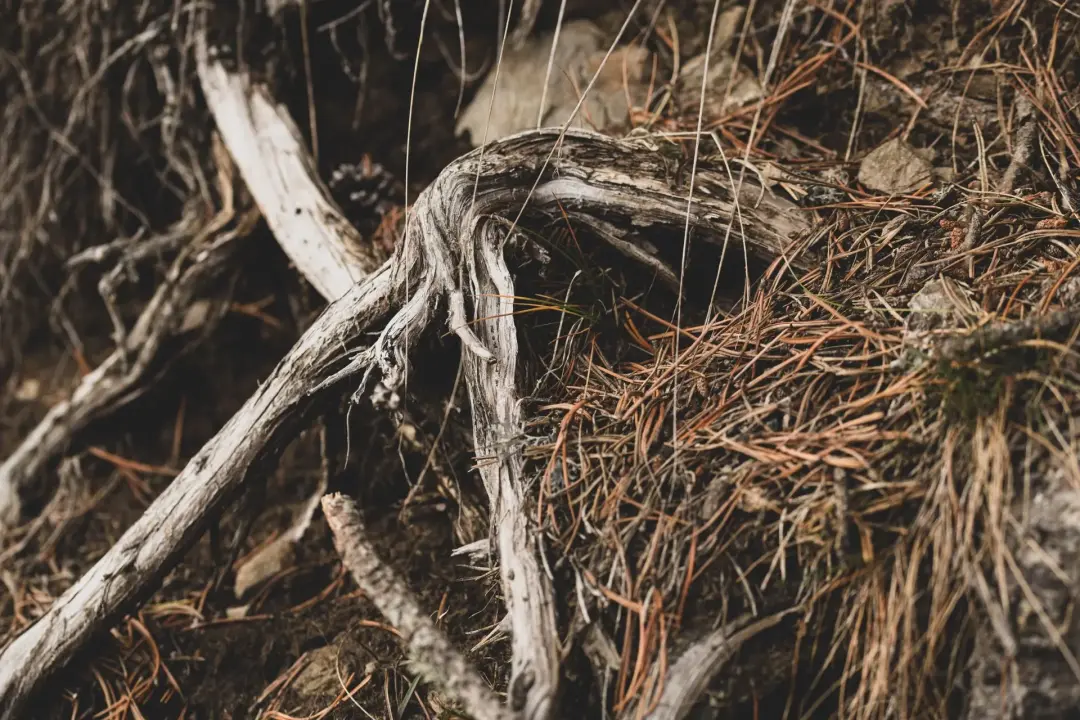
Construction damage or previous root cutting may also make a tree more vulnerable during storms. Not every exposed root means the tree must be removed.
Some species naturally develop visible surface roots, and minor soil erosion may reveal roots without affecting stability. The concern increases when several large roots have moved or broken, especially if the tree has also developed a new lean.
A tree surgeon can assess root movement alongside crown weight and trunk condition. Where major anchoring roots have failed, saving the tree may not be realistic. Emergency dismantling can then reduce the risk of the tree falling uncontrolled.
What Exposed or Lifted Roots Can Mean
Exposed roots can appear after heavy rain washes soil away, while lifted roots often indicate movement of the entire root plate. The distinction is important.
A root becoming visible through minor erosion does not necessarily mean the tree is unstable. Freshly lifted roots accompanied by cracked soil and a new lean are more concerning. These signs suggest that the tree may have started pulling itself from the ground. Do not stand on raised soil or attempt to push exposed roots back into place. Further movement can occur unexpectedly.
The size and location of the affected roots also matter. Damage to large structural roots close to the trunk can have a greater effect on stability. Professional assessment helps determine whether root exposure is superficial or whether major anchorage has been lost. Where the root plate has lifted substantially, emergency tree removal may be necessary because the original stability can be difficult to restore safely.
Can a Partially Uprooted Tree Be Saved?
A partially uprooted tree has experienced movement within its root system, often leaving part of the root plate lifted from the ground. Whether it can be saved depends on the size of the tree, the amount of root damage and how far it has moved. Very small or recently planted trees can sometimes be repositioned and supported if enough roots remain intact. Larger mature trees are considerably more difficult because the forces involved are much greater. When large structural roots have torn or lifted, simply pulling the tree upright does not restore their original strength. The tree may continue to be unstable even if the trunk appears straight again.
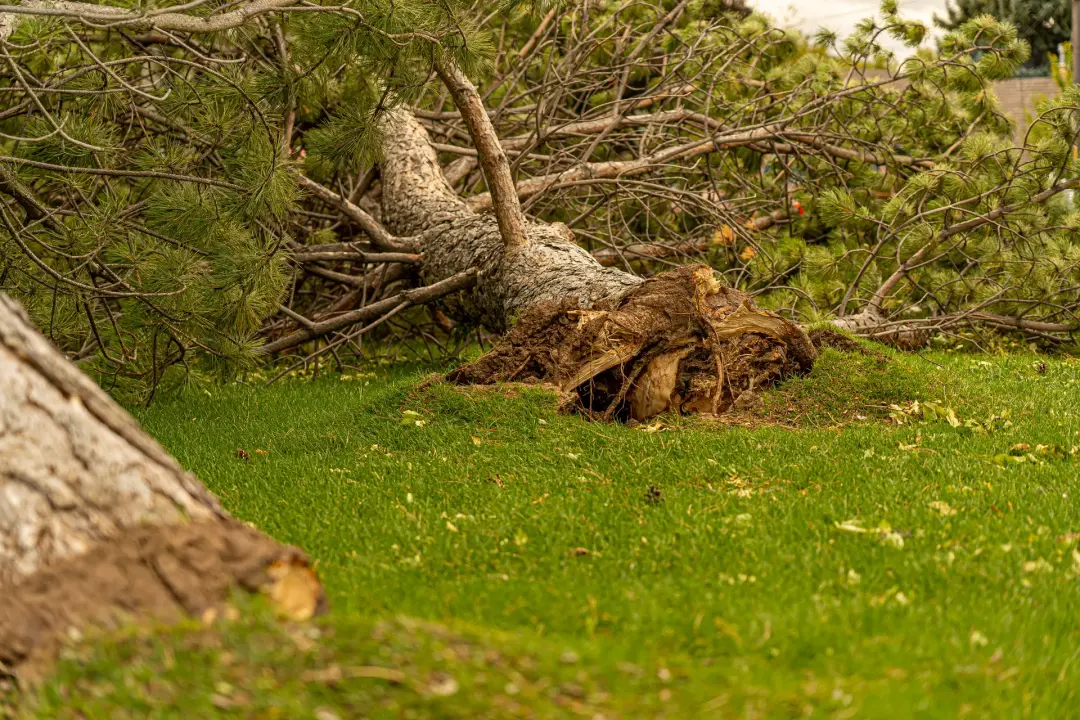
The surrounding soil also matters. Saturated or heavily disturbed ground may not provide enough support while roots recover.
A partially uprooted tree leaning towards a building, road or other occupied area requires particularly urgent assessment.
Do not attempt to pull a large tree upright using a vehicle or rope. This can cause sudden root failure or place people directly in the fall zone.
A professional arborist can determine whether retention is realistic. Where substantial anchorage has been lost, controlled dismantling is often safer than attempting to save the tree.
How Trunk Damage Affects Tree Stability
The trunk transfers the weight of the crown down into the root system, so serious damage can significantly affect the tree’s stability. Storms may create vertical cracks, split forks or remove sections of bark and wood. The seriousness depends on the depth, location and amount of sound timber remaining.
Damage at the base of the trunk or beneath a major fork can be particularly important because these areas carry substantial loads. A tree can sometimes survive with wounds or cavities when enough strong outer wood remains. However, fresh splits that continue moving during wind can indicate active structural failure.
A professional assessment considers the trunk damage together with crown size, decay and root condition. Where the remaining structure cannot support the tree reliably, removal may be recommended. Smaller injuries may instead be monitored as the tree responds and produces new growth.
How Storm Damage Can Expose Existing Decay
Storm damage sometimes reveals decay that was already present inside the tree. A branch may split open and expose soft, hollow or discoloured wood that was previously hidden beneath healthy-looking bark. This can explain why one section failed while neighbouring branches remained intact. Decay can develop after old pruning wounds, branch failures, fungal activity or previous physical damage. Over time, the internal wood may lose strength without obvious external changes.
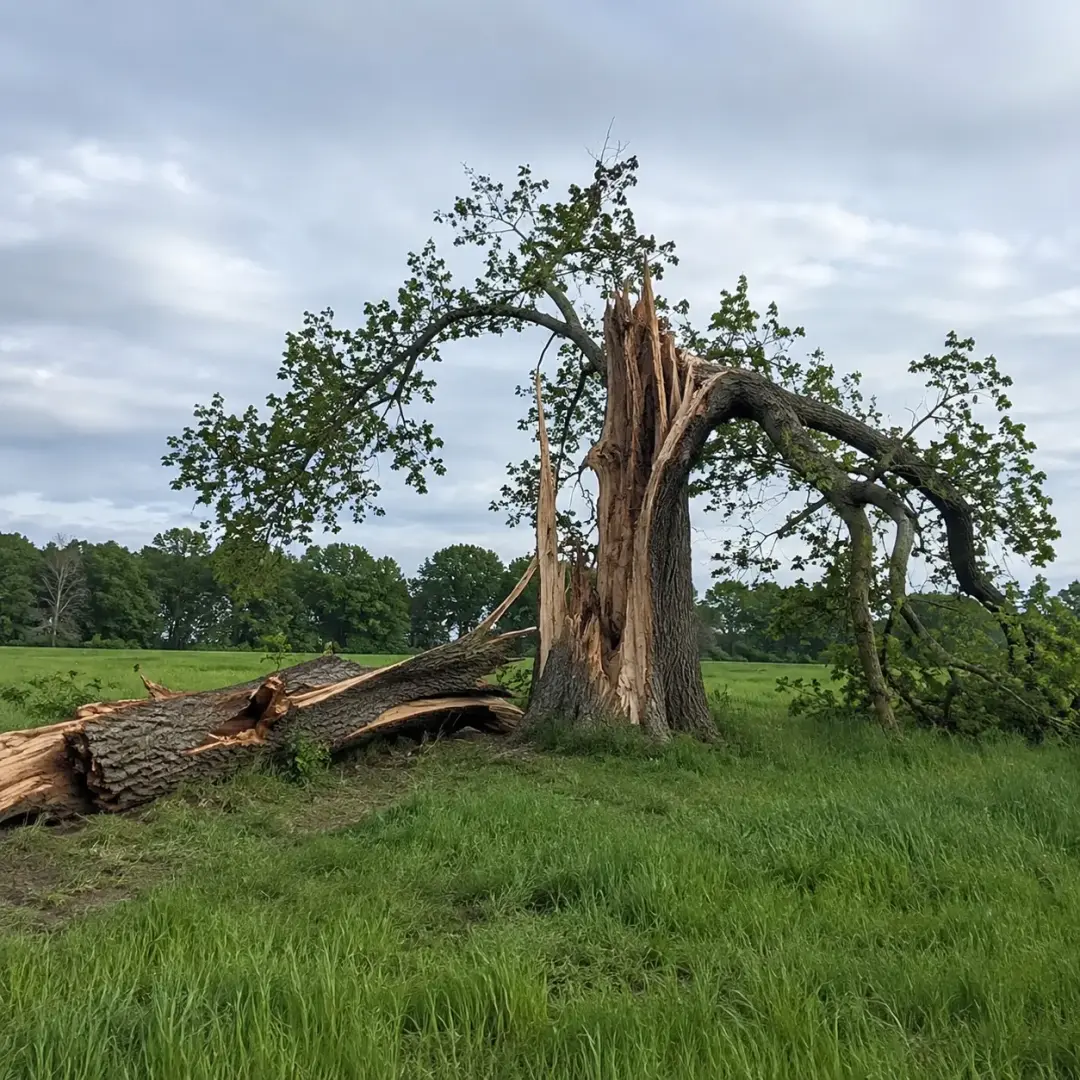
Once a storm places additional force on the weakened area, cracks or complete failure can occur. Fungal growth, cavities and crumbling wood around the damaged section may provide further evidence of long-term deterioration.
Finding decay does not automatically mean the whole tree must be removed. The important question is how much sound structural wood remains. A limited decayed area within one branch may be managed by removing that branch.
Decay extending through the trunk, root flare or several major branch unions can have much greater consequences. A professional arborist can assess whether the storm has simply revealed a local problem or exposed wider structural weakness. Where extensive decay combines with fresh storm damage, saving the tree may no longer be a safe or realistic option.
When Broken Branches Can Be Removed Instead of the Whole Tree
Broken branches can sometimes be removed without taking down the entire tree when the main trunk, roots and remaining crown are still structurally sound. This is common where a storm has damaged only one or two outer limbs. The broken section should be removed back to an appropriate point without unnecessarily cutting healthy branches. Large wounds and damaged branch unions should also be inspected for cracks extending towards the trunk.
The remaining crown needs enough healthy growth to support recovery. If several major branches have failed, the tree may become badly unbalanced or lose too much canopy to remain viable. A tree surgeon can assess whether selective pruning will leave a stable structure. Where branch removal is sufficient, retaining the tree can preserve its value and avoid unnecessary complete removal. Ongoing monitoring may still be recommended after substantial storm damage.
Can a Tree Recover After Losing Large Branches?
Trees can sometimes recover after losing large branches, but the outcome depends on how much of the crown remains and where the damage occurred. A healthy tree with a strong root system may respond by producing new growth over the following seasons. Large branch losses create significant wounds that take time to close. These exposed areas can become entry points for decay, particularly when the break is irregular or extends into the main trunk. The tree may also become unbalanced if most of the damage occurs on one side. Remaining branches can then experience different wind forces than before.
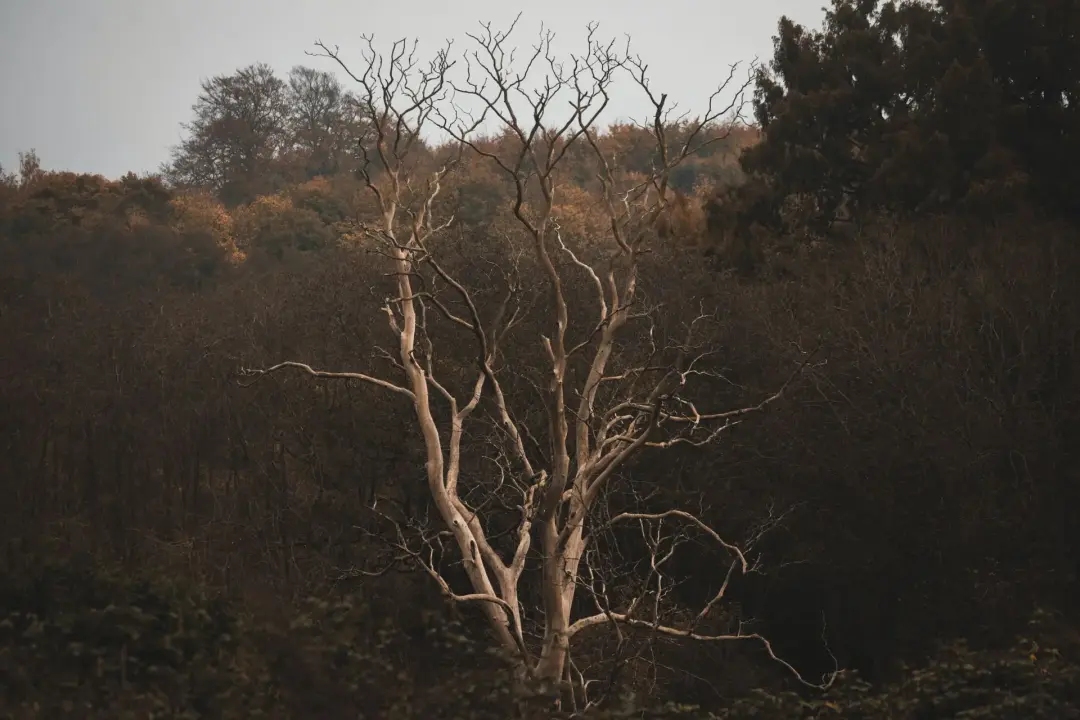
Correct pruning can remove torn or unstable material and leave cleaner points from which the tree can respond. It is usually better to preserve healthy branches rather than remove additional growth simply to improve appearance.
Recovery should be monitored over time. New shoots do not automatically mean the structure has returned to its previous strength. The tree’s species, age and general health all affect its ability to respond to major crown loss.
A professional can assess whether enough viable canopy remains and whether the resulting structure is suitable for long-term retention. Where the tree has lost most major limbs or has serious trunk damage as well, complete removal may be more appropriate.
When Tree Pruning May Be Enough
Pruning may be enough when storm damage is limited to selected branches and the main trunk and root system remain stable. Broken limbs can be removed, damaged ends shortened and deadwood cleared from the crown. The aim is to remove unsafe material while retaining as much healthy growth as possible. Excessive pruning should be avoided because the tree needs leaves to recover and produce energy.
A professional tree surgeon can also check whether broken branches have damaged important unions or created cracks within the trunk.
After pruning, the tree may need monitoring during future storms or growing seasons. Some trees respond well and continue developing normally. Pruning is unlikely to be sufficient where there is major root movement, a severe trunk split or widespread structural decay. In those situations, the underlying stability problem remains even after damaged branches are removed.
When Tree Dismantling May Be Necessary
Tree dismantling may be necessary when a storm-damaged tree cannot be safely retained but also cannot be felled in one piece. This is common in gardens, commercial sites and built-up areas where nearby structures restrict the available space. The tree is removed gradually, beginning with smaller branches before larger limbs and trunk sections are taken down.
Rigging ropes and lowering equipment can control each piece so it does not fall freely onto roofs, fences, driveways or neighbouring property. A storm-damaged tree may also be too unstable for conventional climbing.
In these situations, a mobile elevated work platform or crane can provide safer access. The dismantling sequence must take the tree’s changing balance into account. Removing weight from one side can affect forces acting on the remaining trunk and roots.
Ground workers manage ropes, timber and the exclusion area while the cutting operator works above.
Cranes may be used to lift sections directly away from particularly restricted locations.
Although dismantling generally requires more planning than simple felling, it provides far greater control. For unstable storm-damaged trees, this controlled approach can reduce the risk of sudden collapse during the removal process.
When Emergency Tree Removal Is the Safest Option
Emergency removal is usually the safest option when the tree has lost significant structural support and cannot reasonably be stabilised. Examples include severe root plate movement, major trunk splits and widespread decay combined with storm damage. A tree leaning towards occupied buildings or busy roads may also require urgent removal when further movement is likely.
The decision should be based on professional assessment rather than appearance alone. Some badly damaged-looking trees can be retained, while others with less obvious defects may be structurally unsafe.
Emergency removal may involve complete felling where sufficient open space exists. In confined areas, controlled dismantling is usually required. The priority is preventing uncontrolled failure and protecting people and surrounding property. Where conditions are temporarily too dangerous for immediate work, the area may first need to be isolated until removal can proceed safely.
Trees at Risk of Falling onto Buildings
A storm-damaged tree that could fall onto a building deserves prompt professional assessment. The potential consequences are greater because even a partial failure can damage roofs, windows, conservatories, garages and other structures. Look from a safe distance for a new lean, lifted roots or cracks in the trunk. Branches that have moved closer to the building may also indicate structural change. Do not enter areas directly beneath an unstable tree simply to inspect damage to the property. The removal method will depend on the amount of space available. In many residential settings, the tree cannot be felled directly because the building sits within the natural fall zone.
Controlled dismantling allows branches and trunk sections to be lowered individually.
Cranes may be used where large sections need to be lifted away from roofs or other vulnerable areas.
A mobile elevated work platform can provide access if the tree itself is too unstable to climb. In some cases, limited pruning may reduce the immediate hazard while allowing the tree to remain.
Where major root or trunk failure has occurred, however, keeping the tree can expose the building to continuing risk. Early assessment usually provides more options for controlled work before the tree moves further.
Looking for reliable emergency tree removal in Newbury, Donnington or Thatcham? We provide prompt, safe removal of storm-damaged or dangerous trees to keep your outdoor space secure. Give us a call today for more details.