How To Choose The Right Woodland For Tree Planting
Choosing the right woodland for tree planting starts by understanding what the land can support. Planting trees in the wrong area can cause poor tree growth and damage the nearby wildlife and the ground. First, look at your site's soil and drainage. Some trees need free-draining soil, while others can cope better in heavy or wetter ground. If the site stays waterlogged, many tree species will struggle to grow, and their roots may rot. Therefore, it's important to check the soil type, see how deep it is, and find out whether it dries quickly in summer, since these factors can affect the tree's survival.
It's also important to check what tree species are already on the site. Open areas, such as heathland, species-rich grassland, peatland, and wetlands, are valuable habitats for wildlife, and planting trees there can damage rare plants and nearby habitats. Planting tree species specifically for wildlife, timber, shelter, or landscaping can often make your land more resilient to pests, diseases, and changing weather.
Understanding Your Site And Soil Type
Understanding your site and soil type is one of the most important steps when it comes to choosing the right trees to plant. Trees get all their water, air, and nutrients from the soil, so if the soil cannot provide the right balance of these, the trees may grow slowly, become weak, or die. When you match your planting plans to the land, young trees can settle in faster and grow stronger.
You can check your soil's quality by looking at its texture (which is how much sand, silt, and clay the soil contains). Sandy soils drain quickly, and they can dry out during warm weather, so trees that need a lot of water or moisture may struggle to grow in this type of soil. Clay soils hold water for longer, but they can also become heavy and compacted, which can make it harder for roots to spread and for air to reach them. Many woodland sites often sit somewhere in between these soil types, but even small changes in the soil's quality can affect what trees will grow.
You also need to think about your site's drainage and water levels. In the UK, land can stay wet for long periods of time, especially during winter, and waterlogged soil can cause root problems and poor growth for many tree species. On the other hand, free-draining slopes can dry out in summer, which can put stress on young trees during heatwaves. Knowing where water sits, where it flows, and where it drains can help you choose the most suitable tree species to plant.
Native Trees Versus Non-Native Trees
Knowing whether to plant native trees or non-native trees is an important step when you're choosing the right trees to plant. This is because the tree species you plant can affect the nearby wildlife and how easy the woodland is to manage.
Native trees are tree species that naturally belong to the UK, such as oak, birch, rowan, hazel, and hawthorn. They often support more local wildlife than any other species, and many insects, birds, and mammals rely on these native trees for food, shelter, and nesting. Native trees can also be a safer option because they have grown in the UK’s weather patterns for such a long time. This means that they can cope better with local soils and seasonal changes. However, “native” does not always mean “problem-free”, and some native trees can still struggle to grow in the wrong soil or be affected by diseases.
Non-native trees are species that have been imported from other countries, such as Douglas fir, sweet chestnut, or certain pine trees. Some of these tree species can grow faster, produce better timber, or cope better in different soils. In some cases, non-native trees can be planted to reduce the pressure put on native trees for timber extraction.
Choosing Trees For Wildlife And Nature
Choosing to plant trees specifically for wildlife and nature matters because it can make your woodland a home and food source for many wildlife species. Different trees can support different insects, birds, and small animals, and if you plant a tree that suits the local wildlife, you can help build a stronger woodland environment. Leaves can feed caterpillars and other insects, and flowers and catkins provide pollen and nectar for bees and other pollinators. Seeds, nuts, and berries feed birds and mammals, and bark can provide shelter.
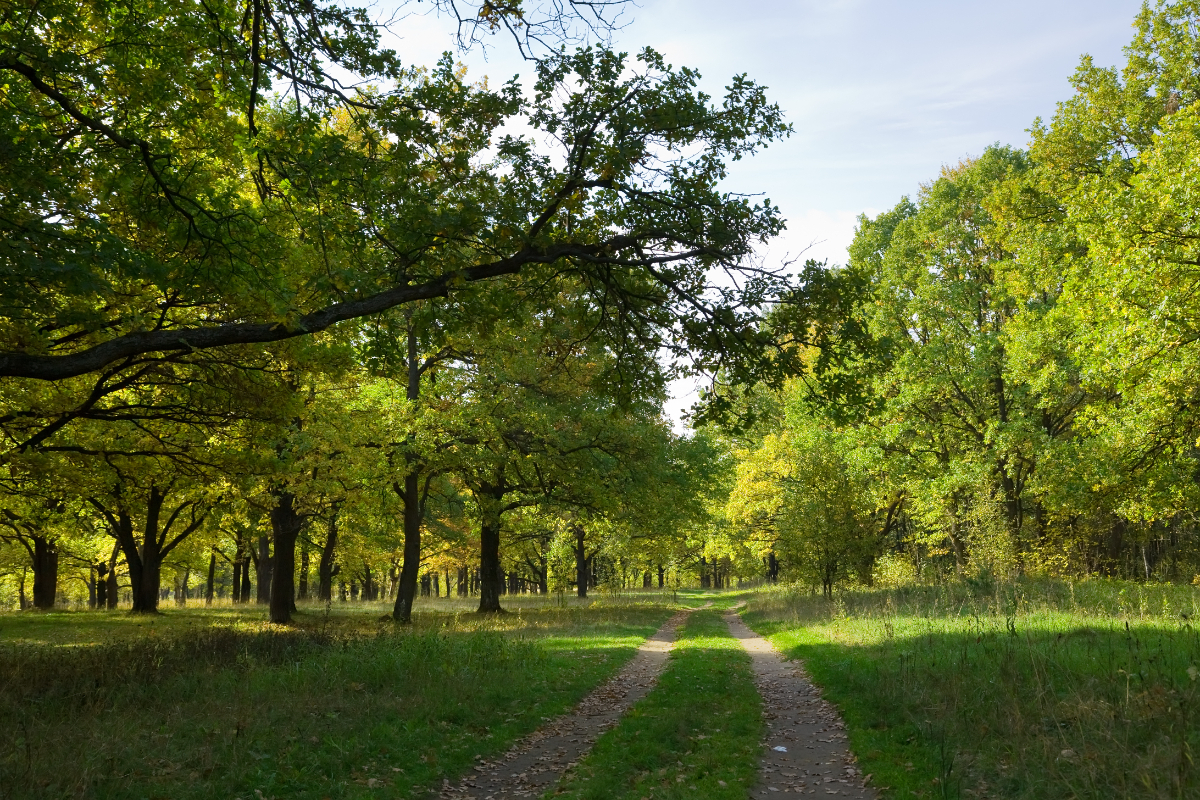
The top 3 tree species for wildlife habitats in many woodland settings are oak, willow and birch.
Oak trees can support a wide range of insects, which can then feed birds like tits and woodpeckers. Additionally, acorns from oak trees can feed jays, squirrels, and other animals, and old oak trees can be used to form holes and crevices for nests and shelter.
Willow trees are one of the best food sources for bees in spring, since their catkins provide pollen and nectar when little else is available. Willow trees can also support the lifecycle of many insects.
Birch can grow well on poorer soils and provide seeds for birds such as siskins and redpolls. Birch trees can also support many insects and help create a light, varied woodland structure.
Green Tips provides woodland management services to help keep your woodland areas safe, healthy and well-cared for. We can plan and carry out work like thinning, pruning, planting, and path clearance, so that your woodland stays strong and enjoyable for years.